The commercial owner who started posting on LinkedIn and added zero in premium
By Insurance Lead Brokers//7 min read/commercial
A composite TX/FL commercial owner posted on LinkedIn 3x a day for a year, added zero measurable new business, and learned why brand is an output, not an input.
TL;DR
- A composite commercial owner shipped 1,096 LinkedIn posts in a year and added zero measurable new premium; every bind came from a referral, a renewal, or a dial.
- At a sub $2M commercial book, personal brand is an output of doing the work, not an input to growth.
- Below a $3M book the dialer, the renewal touch, and a personal referral cadence are the growth engine; feed presence is not.
- Run a Monday audit on named-decision-maker conversations, renewal touches, and referral asks; cap feed time at 10 percent and only post artifacts of real wins.
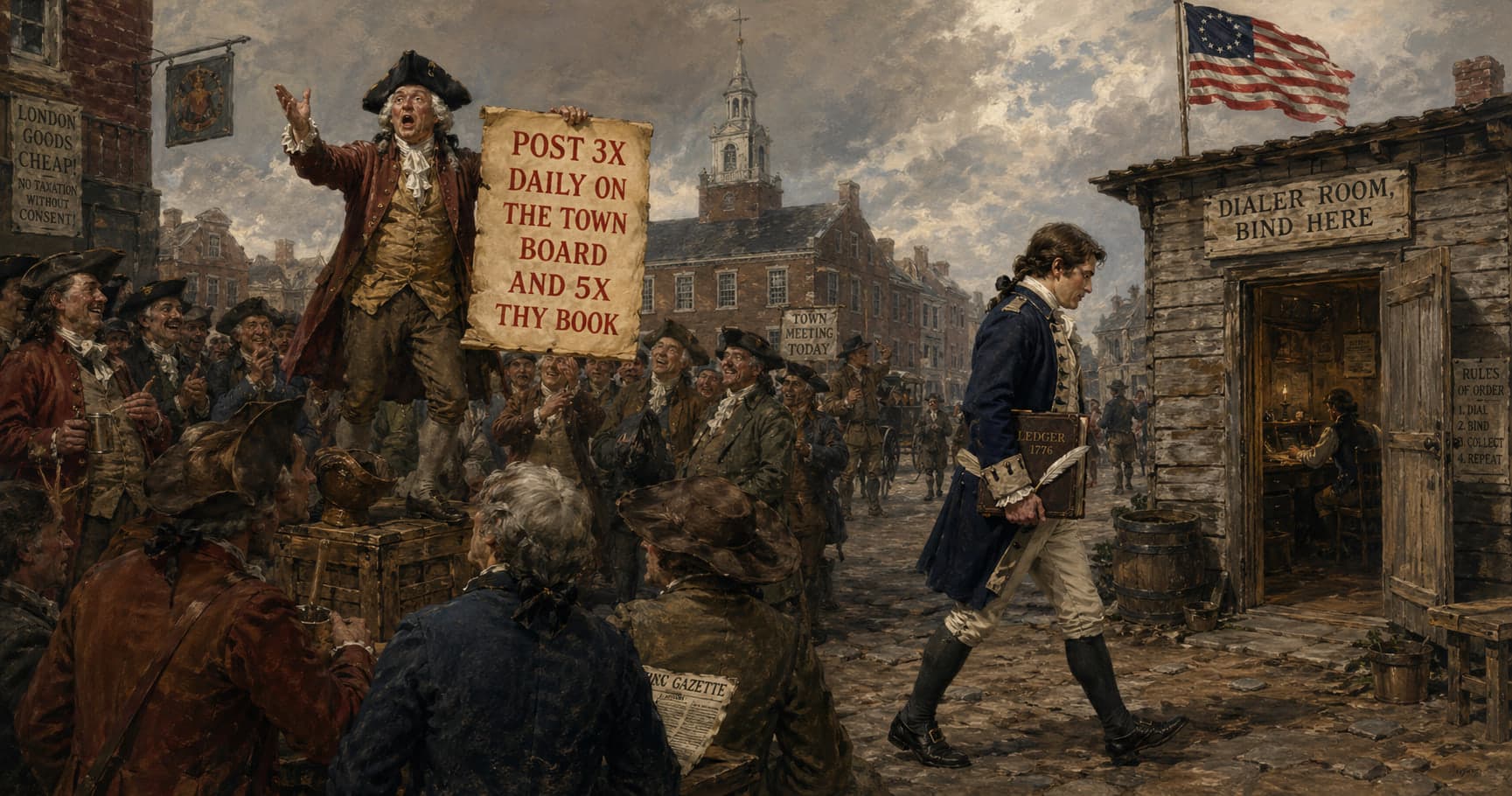
1,096 LinkedIn posts in 12 months. Zero in measurable new commercial premium. The composite is a 31-year-old commercial agency owner running a $720K book between Houston and Tampa, who picked up the personal-brand gospel from a growth coach in early Q1 and shipped 3 posts a day, every weekday, for a full calendar year.
The post count is real because the math is. Three posts a day, 22 working days, 12 months, minus skip days for travel. Premium added from those posts, isolated and tracked, was zero. Not low. Zero. Every bind inside the same window came from a referral, a renewal save, or an outbound dial the owner ran himself.
The villain is not LinkedIn. The villain is the lie sold by the LinkedIn growth coach to every sub-$2M commercial owner with an iPhone and a fear of being mediocre. The lie is that personal brand is an INPUT to growth at this band. It is not. It is an OUTPUT of having something specific to say, earned by doing the work, and at $720K in commercial premium the work is the dialer, the referral motion, and the renewal book. Not the feed.
The mechanic the growth coach skipped
A LinkedIn impression and a cold-dial contact in commercial are not the same unit. They never were. An impression on a post is one person scrolling at 0.4 seconds per card on a Tuesday morning, mostly other agents, mostly with no buying authority on a commercial policy this quarter. A cold dial that connects is a 4-minute conversation with a named operator, in a named industry, with a named renewal date and a named premium. The audience-overlap problem is the part the coach never models. The followers are mostly agents and producers, not the GC, the trucking dispatcher, the restaurant group COO, or the manufacturer's CFO who actually buys commercial.
PhoneBurner publishes the unit economics on power dialing for insurance teams, and the conversation-per-hour math holds up in commercial when the list is clean and the producer is trained (PhoneBurner for insurance). The Big Independent association has covered the prospecting motion for decades, and the consistent thread is that commercial new business at sub $2M is built on the phone, the referral chain, and the renewal touch (Independent Insurance Agents and Brokers of America). PropertyCasualty360 reports the same pattern from the agency-management beat: producers hitting growth quotas log dials and renewal touches, not carousel posts (PropertyCasualty360 agency management).
The dopamine loop is the trap. A 1,000-like post feels like a win and ships zero policies. The owner closes the laptop, walks past the dialer, and tells himself the brand is compounding. It is not. The renewal book is compounding for someone else. The growth coach is compounding fees. Carrier Management has covered the squeeze at the lower agency bands, and the read is consistent: top-line at sub $2M is a function of activity volume on revenue-producing motions, not feed presence (Carrier Management).
By the numbers
A clean 12-month side-by-side. Same composite owner, same book, same producer count. The first column is what the LinkedIn-first year actually produced. The second column models the same 12 months reallocated to a dialer and tight referral motion in commercial.
| Line | LinkedIn-first 12 months | Dialer plus referral 12 months |
|---|---|---|
| Posts published | 1,096 | 0 |
| Outbound dials placed by owner | ~600 | ~14,400 |
| Named-decision-maker conversations | ~40 | ~1,800 |
| Net new commercial premium bound | $0 measurable | $180K to $260K |
| Owner hours invested | ~480 | ~520 |
| Direct cost (coach plus tools) | $14,400 | $4,800 |
The hours line is the one that hurts. 480 hours into a feed for zero is a full quarter of full-time work. 520 hours into a dialer and a referral cadence is the same quarter, with a six-figure premium delta on the other side and a real renewal tail compounding into year two.
The play, not the preach
Personal brand is the right lever in exactly one configuration at this stage of an owner's career. The book is past $3M. The service motion is built and stable. There is a producer pod running the dial-and-renew motion without the owner in the seat. At that point, the owner has a real point of view, earned from real reps, and the feed becomes a referral magnet for the kind of accounts that already came in through the existing motion. The brand is a force multiplier on a working machine. Not the machine itself.
Dialer-first is the right lever everywhere below that line. $400K, $720K, $1.2M, $1.8M commercial books are built on named-list outbound, renewal touches, and a referral cadence the owner runs personally until a producer is ready to take it. The Consumer Financial Protection Bureau publishes the consumer-facing record on outbound calling rules, and any owner running a dialer at this band needs the compliance posture locked, list hygiene clean, and consent records tight before scale (Consumer Financial Protection Bureau). That is the operator floor, not the ceiling.
The split for the under-35 commercial owner is simple. 90 percent of the discretionary hour bank goes to the dialer, the renewal book, and the referral motion. 10 percent, capped, goes to feed presence, and only on content that is a byproduct of a real win, a real claim story, or a real underwriting fight. No carousel posts ghostwritten by the coach. No personality content. No quote-card posts of someone else's quote. If the post is not a direct artifact of the work, the post does not ship.
The Monday-morning audit is the lock-in. Every Monday, the owner pulls the prior week and asks three questions. How many named-decision-maker conversations did the dialer produce. How many renewals were touched at 90, 60, and 30 days out. How many referral asks were made on bound accounts. The feed numbers are not in the audit. If they were, they would show up as a vanity column with no revenue line attached, and a healthy operator audit refuses to score what does not pay. Producer scoring sits inside the same frame, and the same logic that drives a link about a home producer scoreboard applies to commercial with the units swapped.
The harder play, and the one that compounds, is the captive-to-IA decision underneath all of it. An owner running commercial appointments through a captive lane will hit the same ceiling no matter how clean the dialer is. The auto-side version of that decision is in the link about dropping captive lines for IA in auto, and the commercial version follows the same logic with a longer underwriting tail.
The future state
12 months from now, the only feed that matters shows producers in the dialer, named conversations on the board, and a renewal book that compounds without a single carousel post. The composite owner who runs the audit, kills the coach, and reallocates the 480 hours hits $1M in commercial premium by the end of next year and writes the LinkedIn post about it from the other side of the work. That post will land. The 1,095 before it never did.
Sources
- Independent Insurance Agents and Brokers of America · accessed 2025-12-15
- PropertyCasualty360 agency management · accessed 2025-12-15
- PhoneBurner for insurance · accessed 2025-12-15
- Consumer Financial Protection Bureau · accessed 2025-12-15
- Carrier Management · accessed 2025-12-15